Three reasons:
1. Reduce unintended consequences of non-target animals
2. Offer hunters an opportunity to try modern ammo at little or no cost
3. Preserve ammunition choice and the legacy of hunters as conservationists into the future
Scavenging wildlife face many threats that are hard to address such as avian influenza or collisions with vehicles and infrastructure. Hunters, who are committed conservationists, are uniquely positioned to address one of these issues. Lead poisoning is a leading cause of death in eagles, and studies have shown that lead concentrations spike in the blood and tissue of eagles during and directly following hunting seasons1,2.
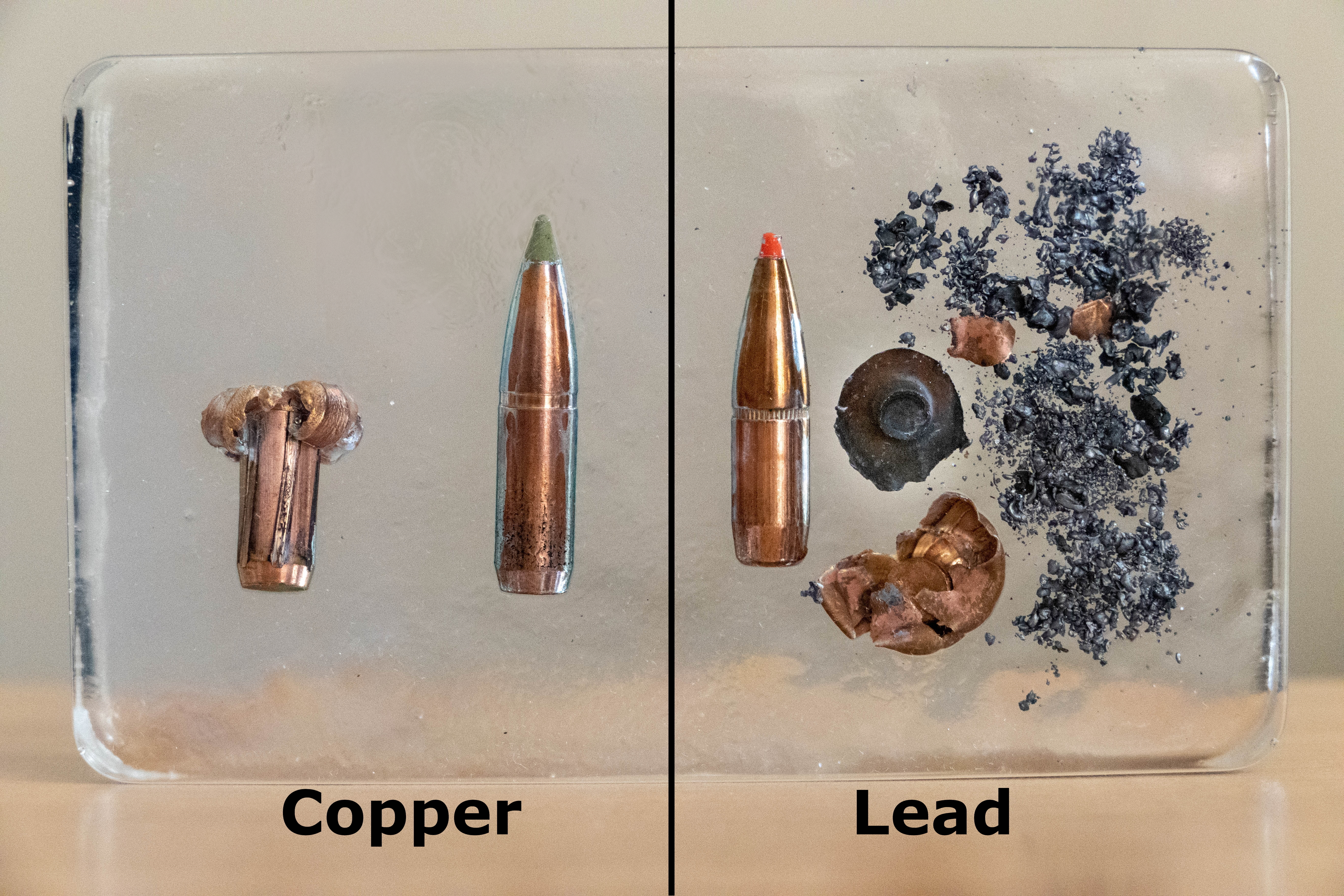
Upon impact, lead bullets tend to fragment into innumerable fragments, some too small to see or find with the naked eye after impact, spreading up to 18 inches beyond the wound channel.
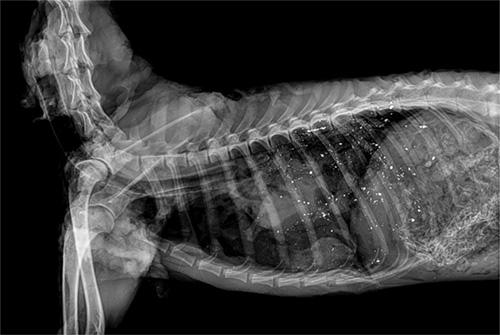
X-rays show how far these lead fragments can spread throughout game animals.
This video shows an example of bald and golden eagles scavenging on hunter harvested elk in Montana.
When scavengers eat from the remains of field-dressed game left behind in the field, they can ingest some of these lead fragments. Eagles and other raptors, which tend to scavenge more in fall and winter – coinciding with deer season – have an acidic digestive system that quickly breaks down lead so it enters their bloodstream. It takes small amounts of lead to cause health issues and even death.
You can learn more at the North American Lead-Free Partnership.
Check out these lead-free testing videos from the North American Lead-Free Partnership, search their ammunition database to see what’s available, or go directly to our Find Ammo page.